
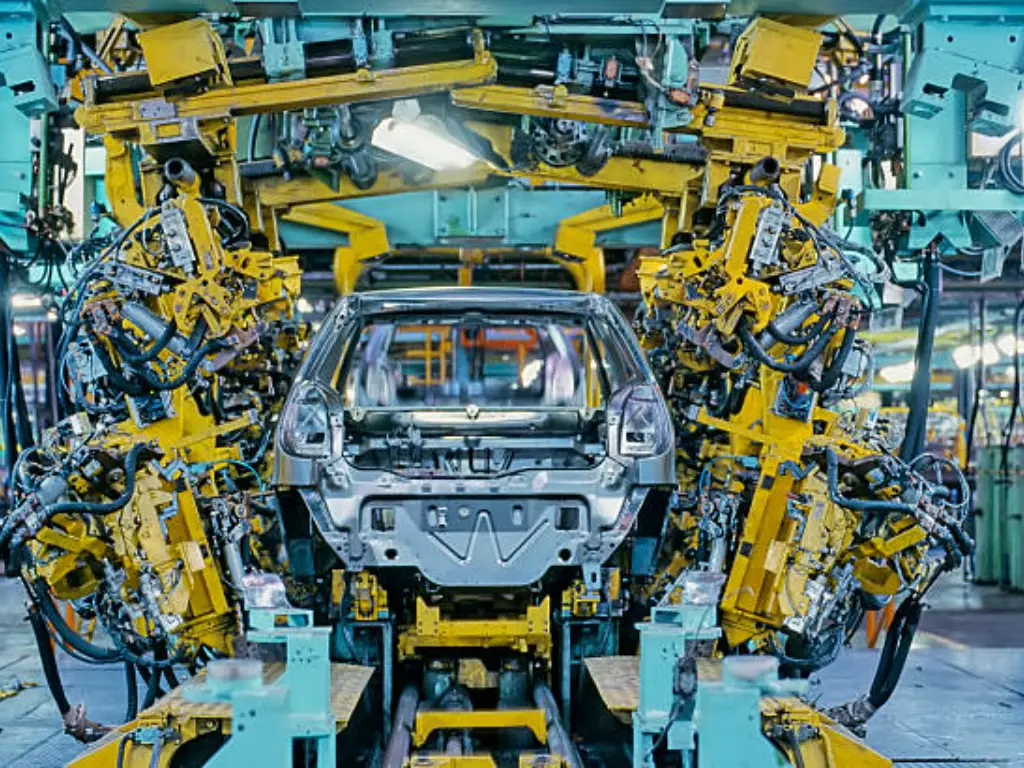
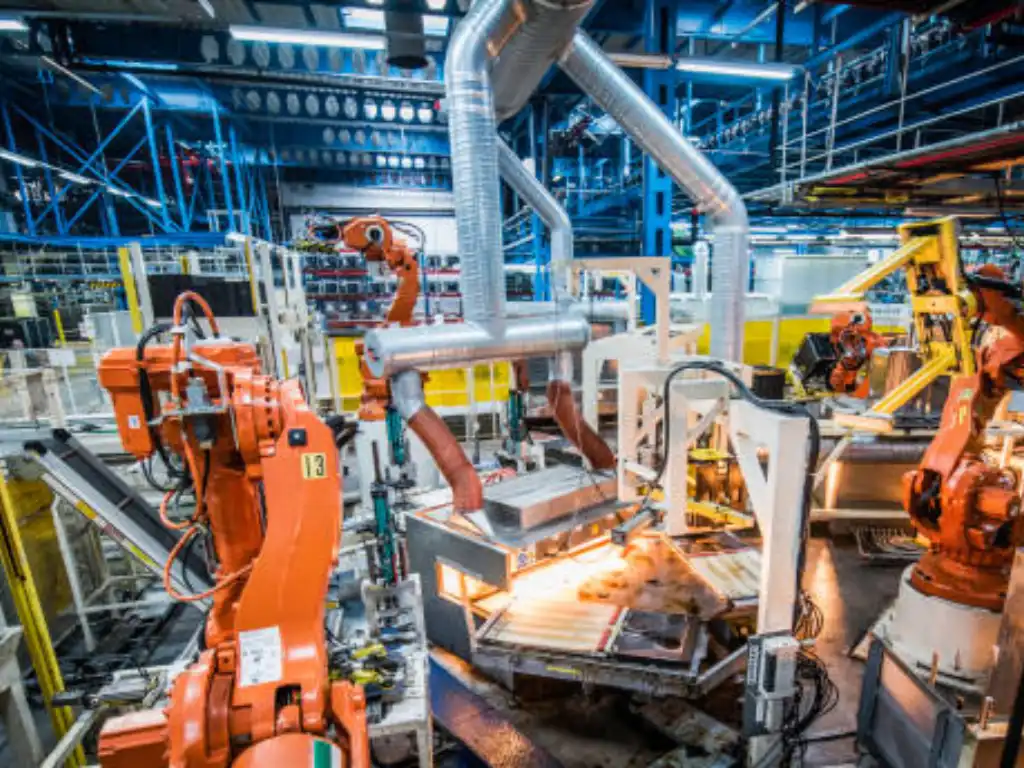
Enter a contemporary automotive manufacturing plant. It is a large, complicated, and very structured space devoted to accuracy, a core pillar of the auto industry. This is the heart of the modern automotive industry, a showcase of smart manufacturing in action. You observe the spectacle: a well-choreographed show of sparks when thousands of articulated robots are at work. You can hear the regular beat of the production line, the voice of operational efficiency itself. A two-ton machine, a new car, comes off the line every 60 seconds, and it is ready to go into the world.
It is, by any standards, an automation miracle.
The natural question that arises out of this spectacle is how this impossibly complex operation works. How do these production processes work to transform raw coils of steel and aluminum into the cars we drive on a daily basis?
The visual response appears to be the robots. They are the most noticeable section of the show. But look closer. How do these robots have such a strong grip? What parts can move with millimeter accuracy in less than a second? What drives tools, helps human workers, and does important work in places where electric sparks would spell disaster?
The solution is the invisible hand, the mighty and dependable workhorse of modern automation: pneumatics. The key power source of the factory floor is compressed air. Not only will this article provide you with a detailed, step-by-step analysis of the five fundamental steps of the manufacturing process, but it will also shed some light on where and why pneumatic technology is the non-negotiable, indispensable engine of this miracle.
Stage 1: Stamping – Forging the Vehicle’s “Skin”
*This video shows how a car is made.
The car has to be shaped before a single weld is done. This trip starts in the stamping plant, where there is great power. In this process, huge coils of sheet steel or aluminum, up to 20 tons, are unraveled and fed into a blanking press, which cuts them into large, flat blanks.
These blanks are raw materials of the outer panels of the vehicle. They are then conveyed automatically into a sequence of huge stamping presses, some of which are three stories high, which work with enormous power, usually in excess of 2,000 tons. These presses beat the metal, bend, shape, and trim it with identical dies in a fast, powerful series, KA-CHUNK, KA-CHUNK, to form the complex, three-dimensional shapes defined by the vehicle design: the doors, the roof, the hood, and the side panels.
Handling and speed are the most important to maintain high quality standards. You cannot afford a multi-million dollar press line waiting on the next blank. This is the point where pneumatics come into the picture. The blanks are de-stacked with heavy-duty pneumatic actuators and vacuum grippers and fed into the press at an unbelievable rate and accuracy.
Moreover, when the new (and frequently sharp) panels come out of the press, strong pneumatic clamps are used to give the raw, unyielding hold required to hold them. These clamps keep the panels in place as they are moved by robots to racks or the next step so that the process proceeds without a hitch. They are easy, strong, and quick-moving– an ideal fit in the high-speed, high-impact stamping plant, ensuring initial product quality from the very first step.
Stage 2: Welding – The Birth of the “Body in White” (BIW)
This is the stage that defines modern automotive manufacturing. The newly stamped panels—hundreds of them—now converge in the body shop. This is the “BIW” or “Body in White” stage, and it is where the vehicle’s structural skeleton is born. These robotic assembly lines are a breathtaking display of automation.
Hundreds, sometimes thousands, of industrial robots line the process, each programmed to perform a specific set of tasks. In a shower of incandescent sparks, these robotic arms move and articulate, grabbing panels, holding them in place, and applying thousands of “spot welds” to fuse the metal together with a precision that minimizes the risk of human error.
But here is the critical factor: while artificial intelligence and smart technologiesare improving robotic pathing, the real challenge is precision holding. When you weld thin metal, the intense heat causes it to warp and distort. If the panels are not held in an absolutely rigid, perfect position, the entire geometry of the car will be wrong—a clear case of human error if done manually. A door might not fit, or the car’s structural integrity could be compromised.
This is where pneumatics play a vital role and are mission-critical, providing a seamless integration of power and precision. Before a single robot can apply a weld, the entire assembly is locked into a heavy fixture called a “jig.” This jig is armed with dozens of strong pneumatic clamps and pneumatic locating pins. In a matter of milliseconds, these components activate, driven by compressed air, to push, pull, and clamp every single panel into its exact, pre-defined 3D position.
Only when the entire assembly is held in this unyielding pneumatic grip do the robots descend to perform their welds. The clamps must be powerful enough to completely resist the thermal distortion. They must also be incredibly fast to maintain the “takt time”—the rhythm of the line. Electric actuators would be too slow, too expensive, and too susceptible to the intense magnetic fields and welding spatter of this environment. Pneumatics are the only viable choice for this brutal, high-precision task.
Stage 3: Painting – A Flawless Finish in a Volatile Environment
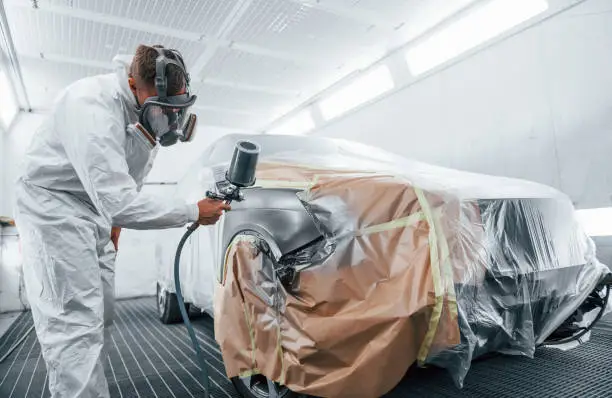
After the Body-in-White has been completely assembled and dimensionally inspected, it is transferred to one of the most chemically complicated and dangerous sections of the factory: the paint shop.
The process of obtaining a mirror-smooth, durable and corrosion-resistant finish is multi-stage. BIW is first immersed in a sequence of cleaning and phosphate baths. It is then immersed in a huge vat to be E-coated (electro-deposited), where an electrical charge is used to deposit the initial layer of corrosion protection on all concealed surfaces.
Once baked dry, the body is transferred into pressurized, dust-free clean rooms to have the primer applied, a base coat (the color) and a clear coat (the protective gloss) applied. High-speed rotary bell atomizers, commonly mounted on robotic arms, are used to do this, spinning at up to 70,000 RPM to produce an extremely fine, electrostatically-charged spray of paint. Modern systems may use computer vision to check for imperfections, generating vast amounts of data on finish quality.
This whole atmosphere is, in itself, very flammable. The air is filled with fumes of atomized paint, solvent-based.
A single spark of a typical electric motor is not merely a danger in this setting, but a disaster. This is the reason why the paint shop is so dependent on compressed air as a safety measure, offering both safety and high energy efficiency compared to specialized explosion-proof electric motors.
The non-negotiable standard is intrinsically safe pneumatics. The huge vats of paint are continuously stirred to maintain the pigments in suspension, not by electric motors, but by pneumatic air motors, which do not spark. The paint itself is transported out of mixing rooms to the spray guns, not using electric pumps, but using pneumatic diaphragm pumps. Precision pneumatic regulators and valves control the flow rate and atomization pressure of the paint that determines the final product quality.
Throughout, the paint shop is a monument to the security and dependability of pneumatic power in the most dangerous of places.
Stage 4: Final Assembly – Where Thousands of Parts Become One Car
The painted body is now brought to the Final Assembly. This is where the vehicle is finished. It is the most complicated and laborious part of the whole car production process, a huge, moving assembly line, where thousands of separate parts are fitted.
It starts with the “marriage”—the point at which the painted body is lowered onto and bolted to the “powertrain,” which is the internal combustion engine / transmission (in the case of an ICE vehicle) or the battery pack and motors (in the case of an electric vehicles). The rising ev adoption has put new demands on this ‘marriage’ process, especially concerning battery design and handling.
Thenceforth, it is a continuous rush of action as the car travels along the line. Robots and skilled labor install the entire wiring harness, the dashboard, sound insulation, carpets, the headliner, glass, seats, doors, lights, wheels, and fluids. This stage is a complicated logistical and ergonomic exercise, and it depends on pneumatic tools and actuators, often connected via the Internet of Things (IoT) for data tracking. New training programs are constantly required to keep the workforce adept at handling new autonomous systems and technologies, with some companies even exploring generative ai for creating work instructions.
Power & Tools: The Driver of High-Speed Repetition
Look at any worker on the line. Probably, they are holding a pneumatic tool. Pneumatic wrenches and screwdrivers are the preferred tool to use in the thousands of bolts and nuts that need to be attached. They are less heavy, less expensive and more robust compared to their high-torque electric counterparts. They provide unbelievable speed and when combined with a transducer can provide the precise, computer-controlled torque needed on such critical safety parts as suspension bolts or airbag modules. This data can be fed into data analytics platforms, with some using advanced analytics and edge computing devices on the line analyzing torque in real-time. Some systems even use deep learning to detect fastening anomalies.
Lifts & Assists: The Ergonomic Solution for Workers
A lot of parts are too heavy or cumbersome to be lifted by a human being. A full dashboard assembly is more than 100 pounds. A car seat is cumbersome and hard to move around. Pneumatic balancers and lift-assists are needed here. These machines are suspended on overhead rails and they apply air pressure to ensure that heavy objects become virtually light. An employee is able to steer a dashboard or a windshield with only fingertips. This “zero-gravity” handling eliminates worker fatigue and injury, which is essential to the line speed and health of the workforce, directly reducing labor costs associated with injuries and improving overall efficiency.
Jigs & Actuators: The “Hands” of the Assembly Line
In addition to the large lifts, there are numerous small, automated tasks in the line. One of the parts must be forced into position. One of the components must be diverted to another sub-assembly. A robot requires a part to be clamped by a small jig. Simple pneumatic cylinders (actuators) are the ideal choice of job in these small, fast, repetitive tasks. They are small, economical machines that push, pull, lift and sort to keep the whole process moving, helping to lower operational costs.
Stage 5: Quality Control – Ensuring Perfection Before the Road
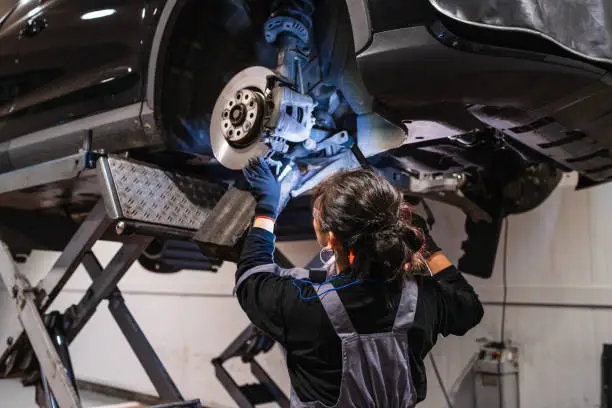
A vehicle will not come out of the factory until it is flawless. Quality Control (QC) is the last phase of the car manufacturing process, which consists of a set of strict inspections to ensure high quality standards are met.
To begin with, the car is taken to a monsoon booth where it is sprayed with high pressure water in all possible directions to make sure that there are no leaks. It is then taken on a shaker and roll rig that mimics the rough roads to ensure that there are no rattles or squeaks. All the electronic parts are tested, including the headlights and infotainment system, to the turn signals. Lasers are used to check and adjust the wheel alignment and the car is usually driven over a special test track.
Pneumatics are also important here, namely in endurance and cycle tests. How do you know that a door latch or a window switch will last 10 years? You test it. Pneumatic actuators are installed in QC labs to carry out these high-cycle, tedious jobs. A basic, high-endurance pneumatic cylinder will bang a car door 100,000 times, press a brake pedal 500,000 times, or flick a switch 25,000 times. This data is also vital for predictive maintenance models. They are the best option in this type of durability testing since they are much cheaper and more durable than an electric motor to perform simple and repetitive motion.
Furthermore, data from these physical tests is often used to validate digital twins of the vehicle. The use of digital twins allows car manufacturers to simulate these same durability tests in a virtual environment, saving time and resources. This simulation often uses machine learning to predict real-world failures.
Why Pneumatics? The Core Advantages in Automotive Automation
Pneumatic elements can be found everywhere in the whole production process, starting with the initial stamp and ending with the last quality control. In a world of accurate electric servo systems and high-power hydraulics, why do automotive engineers still overwhelmingly use pneumatics?
The answer is in a special set of values that pneumatic technology offers in the harsh automotive production setting:
- Superior Durability and Environmental Resistance: The factory floor is a harsh place, full of extreme temperatures, constant vibration, welding spatter, chemical vapors, and high electromagnetic fields. In contrast to delicate electronics, hardened mechanical pneumatic parts are mostly resistant to such conditions, providing millions of dependable cycles in conditions where other technologies would soon fail.
- Unmatched Cost-Effectiveness: In applications that demand high speed, high force, or simple repetitive linear motion, the total cost of ownership (TCO) of pneumatics is much less than complicated electric servos. Systems are easier to design, maintain and replacement of components is much faster.
- Intrinsic Safety: Since pneumatic systems use compressed air, they do not produce electrical sparks. This causes them to be the default, and in many cases the only, legal and safe option to use in flammable or explosive environments, including those containing atomized paint and solvents.
- The Ideal Speed and Power: Pneumatics provide an unmatched combination of high speed and enormous clamping force that cannot be easily obtained cost-effectively using other technologies. This one millisecond response is essential to the high-speed “takt time” (production rhythm) of the whole line.
These are the core advantages of pneumatic technology that have rendered it an unbreakable giant in the automotive manufacturing industry: Durable, Cost-Effective, Safe, and Fast. However, the secret to achieving these advantages and ensuring that your line is not impacted by downtime is all in the quality and reliability of the pneumatic components you choose.
Your Partner for Automotive Manufacturing Excellence
As you know, pneumatic componentsare the lifeblood of the entire automotive manufacturing process. But not all pneumatics can withstand the high intensity, fast takt times, and demanding environments of modern production lines. I am Hebai-Omch — since 1986, we have specialized in pneumatics and air treatment, with over 37 years of automation experience and the trust of 72,000+ global customers. From welding to final assembly, our mission is to make every production line more reliable, efficient, and safe through our one-stop platform for FRL units, pneumatic valves, fittings & tubing, and cylinders.
Solving Your Top Pain Points: Downtime & Efficiency
In welding workshops, extreme conditions like sparks, heat, and dust challenge the durability of standard pneumatic parts. That’s why we design our cylinders and valves with high-temperature seals and wear-resistant piston rods, and offer protection levels up to IP65 / IP67 / IP68, ensuring stable performance even under harsh conditions.
Value Delivered:
- Reduce unplanned downtime caused by seal failures or piston wear;
- Extend service life to 3–10 million cycles;
- Maintain stable, clean air supply with our modular FRL units (AFC2000 / AC2000) to prevent system fluctuations.
We keep your production moving — not your maintenance team.
Precision and Safety You Can Trust
In painting and coating processes, even the slightest pressure variation can affect finish quality or color consistency. Hebai-Omch’s precision regulators and explosion-proof solenoid valves are CE / CCC / RoHS certified, providing 0.1–1.0 MPa precise control and fast response.
Value Delivered:
- Ensure coating uniformity and significantly improve First Pass Yield (FPY);
- Achieve workplace safety and regulatory compliance with robust explosion-proof design;
- Support 25–40 μm filtration precision and 500–4000 L/min flow rate for consistent automation performance.
Your line runs cleaner, safer, and with total precision.
More Than a Supplier: A Solution Engineer
We are not just a component supplier — we are your engineering partner. From design drawings to non-standard customization, our technical team collaborates closely with your engineers to deliver tailored cylinder and valve solutions for ergonomic or space-constrained assembly lines.
Value Delivered:
- Customizable cylinders from Ø12–Ø320 mm bore size and 10–2000 mm stroke;
- OEM / CNC secondary machining / coating services for seamless integration;
- Comprehensive support: product selection, model substitution, and full technical documentation (datasheets, manuals, HD images).
When you need more than parts — when you need solutions — Hebai-Omch is ready to engineer your success.
Hebai-Omch — One Platform, Infinite Motion Possibilities.With engineering expertise, certified quality, and fast delivery, we power every movement in automotive manufacturing with precision pneumatics you can trust.
Conclusion: Drive the Future of Your Assembly Line

The contemporary automobile production process is among the most significant industrial accomplishments of humanity. It is not merely a miracle of automation of data, software, or robots. It is constructed on a basis of crude, dependable strength.
It is constructed on pneumatics.The pneumatic components are the intelligent, robust, and economical motors of the production process, whether in the unyielding grip of the weld-streaked body shop, the zero-gravity lift of the assembly hall, or the inherently safe agitation of the paint booth.
However, to really maximize your line, you require more than components. You must have a partner who is aware of the high stakes, high speed requirements of your industry. Although the future of AI is driven by new automotive technology and market trends, physical work still needs to be done. Although data is becoming paramount (data privacy measures must be stringent), pneumatics can do a lot to offer the core muscle.
Conclusion
Is your production line currently battling unplanned downtime? Are you searching for a more efficient, ergonomic, or precise solution for a specific station, whether you are producing light trucks or new types of vehicles?
Contact the automation experts at Hebai-Omch today. Let us provide you with a [Free Assessment] or our [Custom Pneumatic Solutions for Your Needs] guide. Let’s build the future of manufacturing, together.
 English
  Spanish
  French
  Russian