
The High-Efficiency Mandate: Redefining Cost Reduction
Keeping up with market pressures translated into the need for improving operational efficiency. Businesses cannot rely on traditional cost management practices, like salary cuts or layoffs. Today, cost management is more about strategic investments, process optimization, waste elimination, and managing tradeoffs. Improving quality and meeting productivity goals drives return on investment value during capital expenditure planning, and in production processes, as well.
Unfortunately, cost reduction is usually equated with expenses cuts. Businesses need to understand that cost reduction in the context of operational efficiency drives productivity. Sustainable profitability relies on the excellence of minimizing wasted investment in every operational step. Streamlining and optimizing processes ensure production cost goals are met and high quality is retained. This determination is wholly necessary for improving demand in the market, as well as profitability.
Mapping the 5 Key Pillars of Sustainable Cost Reduction
Reducing manufacturing costswhile practicing sustainable manufacturing operations does not mean you work in isolation. It requires an integrated approach that tackles the fundamental cost drivers along the entire value chain. Drawing from outstanding operational growth and industry standards of best practices, we identify and define five interrelated and interdependent pillars that, when perfected, will result in superior efficiency andcost minimization. These pillars include:
- Streamlining Processes: Relentlessly identifying and removing waste & bottlenecks on the factory floor, primarily by adopting lean manufacturing principles. This addresses idle time and unnecessary movement.
- Supply Chain Strategy: This focuses on integrating and transforming procurement into a strategic function to help stabilize and manage raw material costs, and improve inventory levels and supply chain management.
- Technology: Performing robust predictive maintenance and prescriptive analytics to improve operational predictability and uptime with tools such as the Industrial Internet of Things (IoT) and Artificial Intelligence (AI) and machine learning.
- Optimizing Sustainable Energy: This entails optimal control of utility consumption of utility-paying high usage systems such as compressed air, motors, and climate control systems and overall utilities concerning a manufacturing facility, focusing on energy efficiency and reducing energy costs.
- Product Engineering: This centers on cost control by designing products for easy manufacturing processes, assembly, and the use of standardized materials to reduce total manufacturing costs.
The five pillars outlined represent the basis for embedding cost efficiencyin your core business operations.
Pillar 1 & 2: Process Streamlining and Supply Chain Strategy

These two pillars address the direct costsand operational costs that appear on the factory floor and in the warehouse the most visible and often most immediate areas for improvement, yielding significant cost savings.
Process Streamlining: Zero Tolerance for Waste
These two pillars focus on the operational costs associated with the factory floor and the warehouse— the most noticeable and the immediate potential areas for improvement.
The concept of streamlining processes is at the core of Lean Manufacturing, which has an absolute ban on waste reduction. Waste is anything for which a customer would not pay. The eight forms of manufacturing waste can be summarized using the acronym TIM WOODS, which stands for: Transport, Inventory, Movement, Waiting, Overproduction, Overprocessing, Defects and Skills. This is where labor productivity and minimizing human error are key.
To eliminate waste, it has to be visible first. The value stream mapping (VSM) techniqueis invaluable for such analysis. VSM outlines the entire material and information flow needed to bring a product to a customer, creating a visual distinguishing Value-Added Steps (VA) and Non-Value-Added Steps (NVA) to the production process. The time and resource expenditure of NVA actions, such as workpieces waiting at workstations and overly complicated handling, highlights the need for a process redesign and strengthens the case for it. This directly targets manufacturing expenses.
For the process to be stabilized, it is also important to have Standard Operating Procedures (SOP). When every task is done the same way, variation is reduced. Because variation brings on defects and errors, standardizing work eliminates rework, scrap, and excess inventory cycle time, which improves the predictability and efficiency of the production process and product quality through rigorous quality control.
Supply Chain Strategy: Inventory as a Financial Commitment
While necessary, holding inventory levelsis also a significant financial liability, tied up working capital that could be used for expansion and product development. On top of this, inventory has indirect costs such as warehousing, insurance, and obsolescence, and interest on working capital, including storage costs. Effective inventory management is vital.
An effective supply chain management strategyseeks to eliminate or minimize excess inventory without disrupting production lines. Integrated philosophies achieve this as follows:
- Just-In-Time (JIT) Inventory: JIT systems aim to time procurement of raw materials and production inputs to the exact moment of their necessity. It allows for exceptional inventory holding cost reductions and obsolete stock risks. However, it does require a high level of synchronization and trust with your suppliers.
- Vendor-Managed Inventory (VMI): VMI systems allow suppliers to controlinventory levels at the manufacturer. It decreases the complexity of forecasting and minimizes risks of overstocking, therefore, it cuts down admin, storage costs, and risk costs. Accurate demand forecasting is a crucial element.
Strategic Supplier Relationship Management takes procurement to a new level. Manufacturers should stop focusing on per-unit pricing and short-term price agreements and start working to lock in longer-term pricing agreements and multi-year contracts. Such contractual agreements can smooth price fluctuations, instilling predictability that is often more valuable than short-term price cuts. It shields the manufacturer from the volatility of global commodity markets, securing better ratesfor material costs.
Pillar 3 & 4: Technology Enablement and Sustainable Energy Optimization

These pillars represent the strategic planninginvestments that yield the highest return over time by fundamentally altering how maintenance practices are performed and how resources are consumed, improving cash flow.
Technology Enablement: Predictive Maintenance
These pillars embody the essential strategic planning investments that transform how maintenance is done and how resources are utilized most efficiently and effectively over the long run.
- Employing the technologies of the fourth industrial revolution shifts the balance of the maintenance paradigm towards cost-efficient resource management. Repairing the machine and maintaining the machine resources at a reactive level eventually leads to costly downtimes. Scheduled (time-based) maintenance checks are a waste of operational time and maintenance resources if the machine part is still working.
- Predictive maintenance (PdM) is the future hands down. Machine that is equipped with IoT sensors (which enable remote measurement of vibration, temperature, pressure, current) coupled with AI analytics enables the manufacturer to estimate the remaining useful life of the machine. Maintenance can thus optimally be done during working off-hours, thus advancing unplanned downtimes elimination and overall expensive asset utilization optimization. For all intents and purposes, PdM turns maintenance from a cost center into reliable operational planning, reducing manufacturing expenses and improving lead times. Utilizing advanced analytics in real time helps track key performance indicators.
Additionally, automationmust also be seen from a cost-reduction perspective. Automated systems lessen the need for manual, repetitive tasks, reduce the probability of inconsistencies and errors made by a human, and carry out tasks with a higher level of consistency. When done right with a strong ROI framework, the initial investment for automation in robotics and integrated systems pays off quickly while increasing throughput and reducing direct labor costs per unit and overall labor costs. This provides significant cost savings.
Sustainable Energy Optimization
The compression of air and use of electric powerare two very overlooked error drivers most people including facilities don’t consider in their cost attribution analysis. Even for certain facilities, the energy costs span by a percentage of the cost of production is a major issue. Cutting costs in a strategic manner will require almost a complete realignment in the energy efficiency focus in this area.
- The Value of Energy Audits is Necessary: Every facility needs a detailed valuable audit to isolate and quantify the energy use of their facility. Every facility should be able to track their loss in phantom loads, inefficient air motors or even compressed air leaks.
- Life-Cycle Costing: Asset purchasing should be more than just evaluating direct capital expenditures and should encapsulate a complete life cycle costing. Buying a high energy efficiency motor or even HVAC will costs more in the start but will save more in operating overhead costs and manufacturing costs in the long run. Even for facilities considering a cheaper and less efficient alternative will see the long run, the ROI will be better on the more expensive option.
- Target the Custom-Designed High-Energy System: The most energy consuming systems require special focus. For installing Variable Frequency Drives (VFDs), the systems are able to adjust energy use to what is literally and exactly required, and significantly reducing energy costs by a measure that will cover the cost of the VFDs in a two year span. An example of this is the use of electric motors.
Pillar 5: Product Engineering and Design for Cost (DfC)
The best way to control cost is to design it out of the product before manufacturing operations begin. At the engineering stage, costs become locked in and become impossible to eliminate. This is crucial for achieving lower costs and competitive pricing.
The methodologies here are Design for Cost (DfC) and Value Engineering. In DfC, cost targets are treated as a design specification alongside performance and product quality, instead of being a secondary consideration. This contributes to effective cost management from the start.
- Design for Manufacturability (DFM): DFM is about product structure simplification and the reduction of the number of parts the product contains. Each reduction in the number of parts results in a reduction in material costs, manufacturing costs, inventory tracking costs, and assembly time. Additionally, fewer parts means fewer potential points of failure, and quicker assembly time, reducing the risk of high defect rates.
- Component Standardization: Engineers should increase the use of standard, off-the-shelf parts across product lines. This improves purchasing leverage, streamlines the supply chain, and simplifies Bill of Materials (BOM) management.
Value Engineering (VE) entails an organized approach to meticulously assessing every choice of material and every production process technique. It inquires: ‘Does this material or process contribute any functional value that is worth the customer’s payment?’ If not, that element is a prime candidate for elimination or replacement by a more affordable equivalent. VE is an effective approach to decreasing material costs while retaining all the vital characteristics of value, ensuring customer satisfaction.
The Pneumatic Advantage: Driving Efficiency in the 5 Pillars
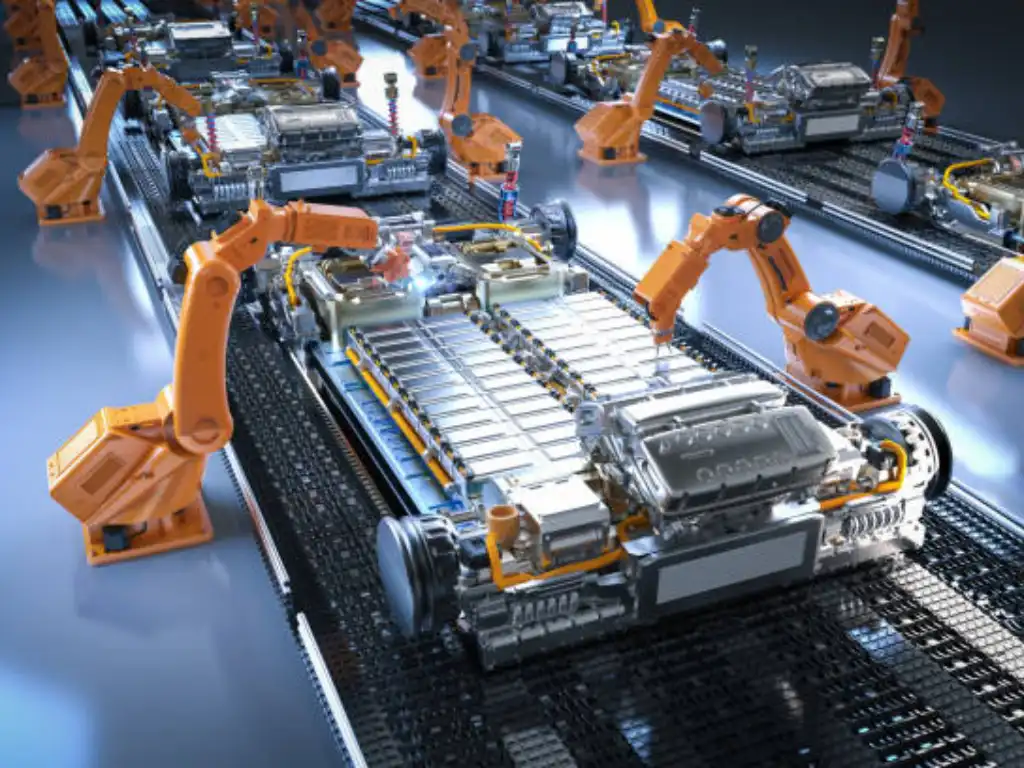
The five strategic pillars successfully working hinges on dependable, accurate, and effective mechanical execution. This is where fluid power technology selection is crucial. Being a specialized manufacturer of Pneumatic Components, we acknowledge that our products go beyond functionality; they are essential for achieving your goals in cost reduction, especially in Process Streamlining and Energy Optimization in the manufacturing industry.
Unlocking Efficiency: Pneumatics as a Solution for Cost Reduction
At HEBAI, we are convinced that the secret to unlocking operational efficiency and initiating cost savings is the efficient utilization of pneumatic systems. All our products such as FRL units, valves, cylinders, and accessories have been developed with a single objective in mind, to offer solutions that simplify operations, minimize downtime, and maximize energy consumption. With its fast response, high precision control and low maintenance needs, pneumatics is central to minimizing direct and indirect costs in automotive, food and beverage, pharmaceutical and other industries.
Our modular FRL (Filter-Regulator-Lubricator) unitsare one of the biggest cost saving factors. We assist businesses in reducing the complexity of air treatment by integrating filtration, pressure regulation, and lubrication into a single small system. This single solution saves the necessity to use several parts, saves time on installation and maintenance, and prolongs the life of pneumatic equipment considerably. Our FRL units have customizable parameters such as pressure control of 0.1-1.0 MPa and filtration accuracy of 25-40 μm, which means that businesses can work in a cost-effective and energy-efficient way without compromising the reliability and durability of their equipment.
Also, our pneumatic cylinders and valves are precision engineered to be durable and performance oriented. Our cylinders have high IP ratings (up to IP68) and lifecycle of 3 million to 10 million cycles, which makes them more reliable in harsh conditions. The correct choice of cylinder and valve combination to use in your particular application can guarantee the highest possible energy efficiency and the lowest possible wear and tear, leading to lower operational costs and fewer system failures. Moreover, our high-quality materials, including stainless steel and aluminum, and customization possibilities make HEBAI sure that each solution will be cost- and performance-optimized, which will help to save money in the short and long term.
Your Blueprint for High Efficiency: Next Steps
Manufacturing Cost Reduction principles have been established. To convert this strategy into lasting profit, we recommend a straightforward three-stage action plan:
| Step | Description |
| Audit | Conduct a targeted quantitative appraisal of the operations, particularly a complex process’s detailed Value Stream Map, followed by an extensive Energy Audit of the air compression system. Data entry must be accurate to ensure the analysis provides value in real time. |
| Targeting | Formalize the audit outcome into actionable, quantifiable Key Performance Indicators (KPIs), like projected OEE gains, MTBF ceilings, and targeted utility budget reductions. Target high-leverage activities like solving major air leaks before low leverage activities. |
| Optimization | Establish a system of Continuous Improvement as the dominant culture of continuous improvement. Ensure the cost reduction initiative remains cross-functional with engineering, finance, and the shop floor. Cost reduction is a culture, a continuous, systematic culture, not an event. Focus on improving labor productivity from the first year. |
Conclusion: Transforming Strategy into Sustainable Profit

High efficiency is not a luxury; it is the engine of sustainable profitability. By diligently mastering the five key pillars—from Process Streamlining to Product Engineering—and making strategic component choices, manufacturers can fundamentally lower costs structure while simultaneously enhancing outputproduct quality.
The journey to lower costs is a journey of precision, and that precision begins with your system’s foundation. We are committed to providing the durable, high-efficiency pneumatic components that enable your most ambitious cost reductiontargets.
Ready to start driving efficiency at the component level? Stop allowing system leaks and unreliable components to compromise your bottom line. We welcome you to consult with our expert team to analyze your current pneumatic infrastructure and uncover actionable opportunities for cost reduction.
 English
  Spanish
  French
  Russian